
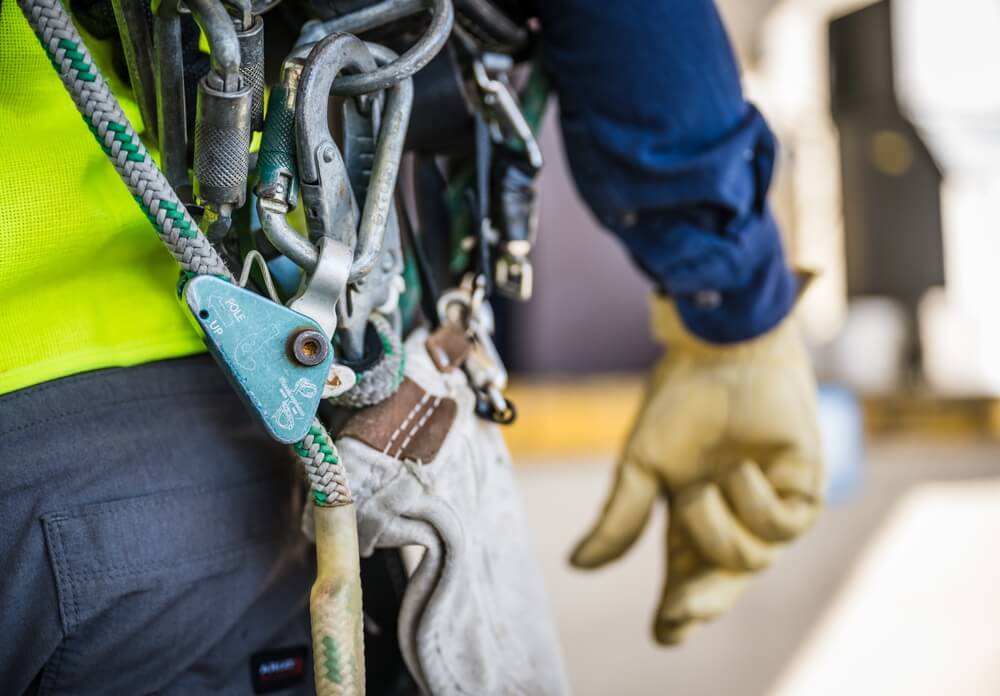
Who Is Liable When Defective Equipment Causes Lineman Injuries?
The moments after a severe weather event in West Virginia transform the already demanding job of a utility worker into a highly unpredictable and hazardous environment. Ice storms that heavily coat equipment, high winds that snap transmission lines along the Allegheny Mountains, and flash floods in the steep terrain of McDowell County require an immediate, coordinated response. When the grid goes down, the pressure from the public and utility companies to restore power quickly is immense.
However, prioritizing systematic safety protocols over speed is the only way to prevent catastrophic, life-altering injuries. The rush to get communities back online often leads to corners being cut, particularly when it comes to the rigorous inspection and maintenance of safety gear.
A powerline technician’s life literally hangs on the structural integrity of their harness and the dielectric strength of their rubber goods. When these fundamental protections fail, the consequences are devastating. Figuring out exactly who is legally responsible for these failures requires a deep understanding of state labor laws, federal safety regulations, and complex product liability standards.
Why Are Pre-Job Inspections of Utility Equipment Non-Negotiable?
Pre-job inspections are strictly required because identifying physical defects like ozone checking, cracks, or chemical contamination on life-saving gear prevents fatal accidents before they ever occur. A mandatory tailboard meeting allows crews to systematically inspect equipment and verify that all personal protective equipment (PPE) meets structural and electrical safety standards before anyone elevates in a bucket or begins a pole climb.
Federal standards established by OSHA 29 CFR 1910.269 mandate that employers must pause specific types of electrical work when adverse weather conditions create distinct, unmanageable hazards. This comprehensive regulation explicitly covers electric power generation, transmission, and distribution, setting strict rules for storm restoration efforts. These regulations dictate that initial site assessments require a thorough visual inspection of the work area to identify downed conductors, compromised pole structures, hazardous debris, and potential backfeed from portable residential generators.
During these initial assessments, crews are required to establish a safe perimeter, verify the structural integrity of all climbing surfaces, and conduct a highly detailed tailboard briefing before initiating any phase of the restoration. Every single member of the crew must completely understand their specific role and the unique hazards associated with the emergency task. Daily inspections must specifically verify the condition of synthetic climbing materials, which are severely impacted by extreme cold weather and ice buildup. Furthermore, linemen are meticulously trained to spot even a hairline crack on rubber gloves, a defect that could easily allow thousands of volts of electricity to bypass the protective layer. Regular inspections also guarantee that all necessary emergency equipment, including specialized rescue gear and comprehensive first aid kits, is readily accessible on the truck.
What Steps Must Linemen Take Upon Discovering Faulty Climbing Gear?
If a lineman discovers faulty climbing gear, they must immediately remove the item from service and alert the crew leader. This is not merely a suggestion; it is a critical directive designed to prevent a catastrophic workplace fall. For example, if a shock absorber pack on a fall harness is deployed or visibly extended, it indicates that the lanyard has already arrested a fall or sustained excessive force and must be permanently destroyed to ensure it is never inadvertently used again.
Working at heights across West Virginia’s mountainous landscape, whether replacing storm-damaged poles along Route 19 near Summersville or restoring main lines in the steep, unforgiving terrain of the state’s southern region, means fall protection is every bit as vital as electrical protection. A broken fall arrest system provides a false sense of security that is far more dangerous than having no protection at all, as it encourages workers to take risks they would otherwise avoid.
You must rigorously inspect your personal protective equipment before every single ascent. First, rely on the mandatory tailboard meeting, treating it not as a bureaucratic formality, but as an essential safety checkpoint. If you identify missing PPE, frayed lanyards, or compromised harnesses, voice these concerns immediately. Ensure they are acknowledged directly by the crew leader and recorded in the daily log. Never attempt to bypass or temporarily “rig” a broken fall arrest system to restore power faster. The grid can wait; your physical safety cannot.
How Should You Handle a Defective Voltage Detector or Grounding Cable?
A defective voltage detector that intermittently fails a self-test or gives inconsistent readings on known sources must be permanently removed from service. Malfunctioning electrical testing equipment creates a fatal illusion of safety, meaning crews could unknowingly interact with live, high-voltage circuits during grid restoration operations.
During post-storm restoration, the standard grid configuration is almost always abnormal. Lines that should theoretically be dead might be dangerously energized due to crossed circuits from falling trees, improper switching at remote substations, or illegal backfeed from improperly installed residential generators. Linemen working on distribution systems regularly encounter 7,200-volt and higher circuits, making accurate voltage detection a matter of life and death.
Key safety requirements must be rigidly followed regardless of how severe the weather is or how loudly dispatch is calling for restoration. Linemen must physically test every single conductor using a properly rated, fully inspected voltage detector before treating any line as de-energized. Furthermore, crews must maintain strict mathematical minimum approach distances (MAD) from energized lines, calculating the safe buffer based on the specific voltage and the individual worker’s level of certification and training. It is the explicit duty of the crew leader to identify these specific electrical and environmental hazards and communicate them unequivocally to the entire team.
Can You Legally Refuse Work If a Bucket Truck Exceeds Safe Operating Limits?
Federal law strictly prohibits utility companies from retaliating against linemen who refuse to perform tasks in objectively life-threatening conditions. If you reasonably believe the task presents an imminent danger of death or serious injury, OSHA protections shield you from termination, demotion, or formal disciplinary action, provided you first request abatement of the hazard and no reasonable correction occurs.
Equipment limitations play a massive role in determining when the weather becomes too dangerous to operate heavy machinery. Digger derricks and bucket trucks are carefully engineered with highly specific operational thresholds, typically capping at 35 to 40 mph sustained winds for many industry-standard models. Extending a boom in wind speeds that exceed the manufacturer’s maximum rating compromises both the hydraulic pressure systems and the structural integrity of the machine. This creates an immense, unmanageable risk of a tip-over or catastrophic mechanical failure.
To ensure your rights are protected when refusing unsafe work, you should follow specific procedural steps. Inform your direct supervisor of the specific hazard, explicitly stating that wind speeds are exceeding the bucket truck’s certified safety rating. Ask the supervisor to mitigate the hazard or provide an alternative, safer method to complete the task. Do not simply leave the job site unless staying presents a direct physical danger in itself; instead, remain available to perform other, safer ground duties. If the refusal escalates to a confrontation, meticulously note the time, the precise weather conditions, the specific equipment involved, and the names of any crew members who witnessed the exchange.
What Happens If a Foreman Orders You to Use Compromised PPE?
If a foreman orders you to use compromised personal protective equipment or attempts to override manufacturer equipment limits, you must clearly voice your safety concerns to the crew leader. When a utility company dispatcher ignores these voiced hazards and forces a crew into life-threatening situations, any resulting injuries are not mere workplace accidents; they are the direct, foreseeable result of a failure to uphold legal safety obligations.
The culture of the utility trade has historically emphasized grit, resilience, and getting the lights back on at all costs. During a major winter storm or straight-line wind event affecting heavily populated areas like the Kanawha Valley or the Eastern Panhandle, linemen are frequently pushed into mandatory extended shifts lasting 16 hours or more for consecutive days. Chronic fatigue inevitably leads to cognitive drift, significantly reducing reaction times and making it incredibly difficult to push back against a dispatcher or foreman demanding that a dangerous repair be completed immediately.
However, the legal system recognizes that human life is inherently more valuable than property or power company restoration metrics. A refusal to work with broken gear must be made in good faith. This means you genuinely believe that an imminent danger exists, and a reasonable person in your exact situation, with your level of training, would agree that the hazard is real and immediately life-threatening.
What Immediate Actions Should You Take After an Equipment Failure Injury?
Following an equipment failure injury, you must secure immediate clinical care at a specialized trauma center and formally document the specific unsafe condition with your employer as soon as physically possible. You must rigorously preserve the defective safety gear and record the exact weather conditions, as this physical and environmental evidence is essential for establishing liability against negligent parties later on.
The rugged landscape of West Virginia complicates storm response significantly, making the documentation of environmental factors absolutely vital after an incident. A restoration effort deep in the coalfields of Raleigh County or along the steep, remote ridgelines in Harrison County often involves navigating heavily forested, inherently unstable ground. Immediately after an accident involving faulty gear, your first priority is protecting your physical and legal well-being.
Seek clinical care immediately to address physical trauma, and do not hesitate to access mental health resources to handle the profound psychological toll of a severe workplace accident. Ensure that someone notes if saturated soil from Appalachian downpours undermined utility pole stability, or if heavy equipment in rural hollows became dangerously unpredictable. Document whether zero visibility, whiteout blizzard conditions, or torrential downpours prevented the crew leader from maintaining vital visual contact with workers aloft. Most importantly, ensure the failed PPE, the broken shock absorber pack, or the malfunctioning voltage detector is physically retained and secured away from employer tampering.
Does West Virginia Workers’ Compensation Cover Faulty Equipment Accidents?
West Virginia workers’ compensation provides no-fault benefits covering necessary medical expenses and partial lost wages following an accident involving faulty utility equipment. While this administrative system reliably covers routine, minor workplace injuries, it legally caps financial recovery and completely eliminates any compensation for a severely injured worker’s ongoing physical pain and emotional suffering.
Importantly, the workers’ compensation system generally acts as an exclusive remedy, barring injured employees from filing direct lawsuits against their employer for ordinary negligence. However, West Virginia operates directly under federal OSHA jurisdiction, meaning the strict regulations outlined by the OSHA Huntington Area Office and Charleston Area Office apply directly to utility worksites throughout the entire state. Under the OSHA General Duty Clause, employers are legally obligated to provide a workplace completely free from recognized, manageable hazards that are likely to cause death or serious physical harm.
When an employer blatantly fails this fundamental duty, and a known equipment failure causes severe injury, injured powerline workers often need to explore legal options beyond standard, highly restricted administrative claims. Securing full financial recovery for catastrophic injuries requires stepping outside the confines of standard workers’ compensation.
What Is a Deliberate Intent Claim Against a West Virginia Utility Employer?
A Deliberate Intent lawsuit bypasses normal employer immunity, allowing an injured lineman to seek full, comprehensive compensation for their suffering, future medical needs, and total lost earning capacity. West Virginia law specifically permits this advanced claim if an employer knowingly forced a lineman into unsafe conditions with a high probability of severe injury, such as explicitly ordering work to continue in a bucket truck during 50 mph sustained winds.
The standard immunity that usually protects an employer from being sued is lifted entirely if the rigorous “Deliberate Intent” standard, clearly outlined in West Virginia Code Section 23-4-2, is met. To successfully pursue a Deliberate Intent claim in West Virginia, a highly specific set of five elements must typically be proven in court. First, there must be a Specific Unsafe Condition—a clearly recognized hazard existed in the workplace, such as working aloft with a known defective harness. Second, there must be actual Employer Knowledge, meaning the employer subjectively knew, or reasonably should have known, about the specific unsafe working condition and the high degree of risk it presented to the crew.
Third, the unsafe condition must constitute a clear Violation of Standards, directly breaching a specific state or federal safety statute (like OSHA guidelines) or a commonly accepted industry safety standard. Fourth, there must be Intentional Exposure, where the employer intentionally directed the employee to work under the unsafe condition despite knowing the severe risks. Finally, there must be Proximate Cause, proving the employee suffered serious compensable injury or death as a direct, undeniable result of this intentional exposure. These industrial injury claims are highly complex, requiring aggressive investigation and litigation, typically filed in circuit courts like the Kanawha County Circuit Court in Charleston or the Cabell County Circuit Court in Huntington.
How Our Legal Team Protects Injured West Virginia Linemen
When vital safety equipment fails during a desperate storm restoration effort, or when a corporate employer actively ignores severe weather hazards to force a crew into life-threatening situations, the physical and financial consequences for West Virginia linemen and their families are devastating.
The experienced legal team at Lineman Injury Attorney deeply understands the intense technical complexities and unique environmental challenges of Appalachian utility work. We are deeply dedicated to holding negligent utility employers and massive equipment manufacturers fully accountable for the harm they cause to hardworking families. Our skilled attorneys know how to thoroughly analyze failed equipment, aggressively secure heavily guarded dispatch logs and weather data, and correctly identify all responsible parties to maximize your financial recovery.
Contact us immediately for a free, completely confidential consultation.
Frequently Asked Questions
How long do I have to report an injury caused by defective climbing gear in West Virginia?
You should notify your direct supervisor or crew leader immediately after the equipment fails. While you typically have up to six months to file a formal workers’ compensation claim under West Virginia law, prompt reporting is vital. It ensures the defective equipment is rapidly preserved as physical evidence before it can be conveniently discarded, “lost,” or altered by the company.
Will OSHA investigate if my bucket truck hydraulics fail during a storm?
The OSHA Charleston Area Office or the Huntington Area Office holds the authority to open an immediate, on-site investigation into severe workplace accidents. An investigation is highly likely if the mechanical failure resulted in a catastrophic injury, an overnight hospitalization, an amputation, or if it involved equipment that was visibly operating far beyond manufacturer safety thresholds.
Can I be fired for refusing to climb a pole with a broken fall arrest system?
Federal labor law strictly prohibits utility companies from retaliating against linemen who refuse to perform tasks in objectively life-threatening conditions. You are fully protected from termination, demotion, or loss of pay, provided you first clearly communicate the specific hazard to your supervisor and explicitly request that the broken equipment be replaced or the hazard abated before proceeding.
What evidence do I need to prove a Deliberate Intent claim?
You must clearly demonstrate that your employer had actual, subjective knowledge of a specific unsafe condition and intentionally exposed you to that hazard anyway. Building this complex case often requires legally preserving and analyzing recorded dispatch logs, gathering sworn witness statements from your tailboard meeting, and securing internal documentation showing that OSHA standards or equipment limits were explicitly violated.

Leave a Reply
Want to join the discussion?Feel free to contribute!